














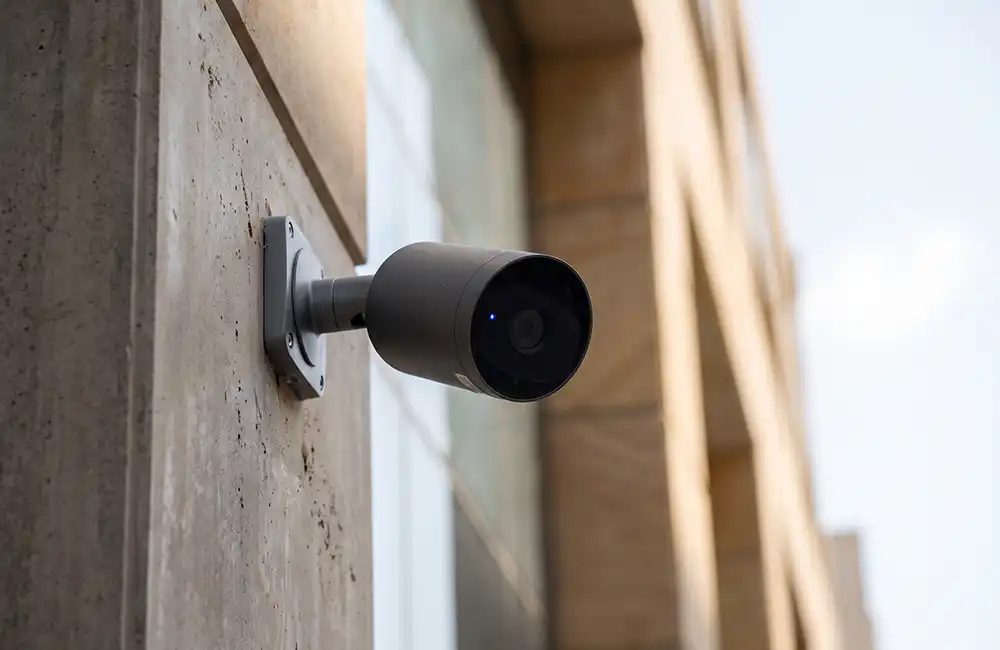
If your organisation is still running an analogue or early-generation digital CCTV system, you are operating with technology that was designed for a fundamentally different era. The gap between legacy CCTV and modern IP-based surveillance with video analytics is not incremental — it is transformational.
Across Qatar, enterprises, commercial facilities, government buildings, and retail environments are replacing legacy systems with intelligent IP CCTV platforms. Here is why — and what modern surveillance can actually do.
The Problem with Legacy CCTV Systems
Traditional CCTV systems — whether analogue or first-generation DVR-based digital — share a common set of limitations:
- Low resolution: Analogue cameras typically capture at resolutions far below what is required to identify individuals, read number plates, or provide legally admissible evidence.
- No intelligence: Legacy systems record continuously and alert on nothing. Security teams must manually review footage — a time-consuming and often ineffective process.
- Local storage only: DVR-based systems store footage locally, creating vulnerability to theft, fire damage, or simple storage failure.
- No remote access or integration: Legacy systems operate in isolation, with no connection to access control, alarm systems, or central monitoring platforms.
- High maintenance burden: Ageing hardware and proprietary systems create ongoing maintenance costs and single-vendor dependency.
What Modern IP CCTV Actually Delivers
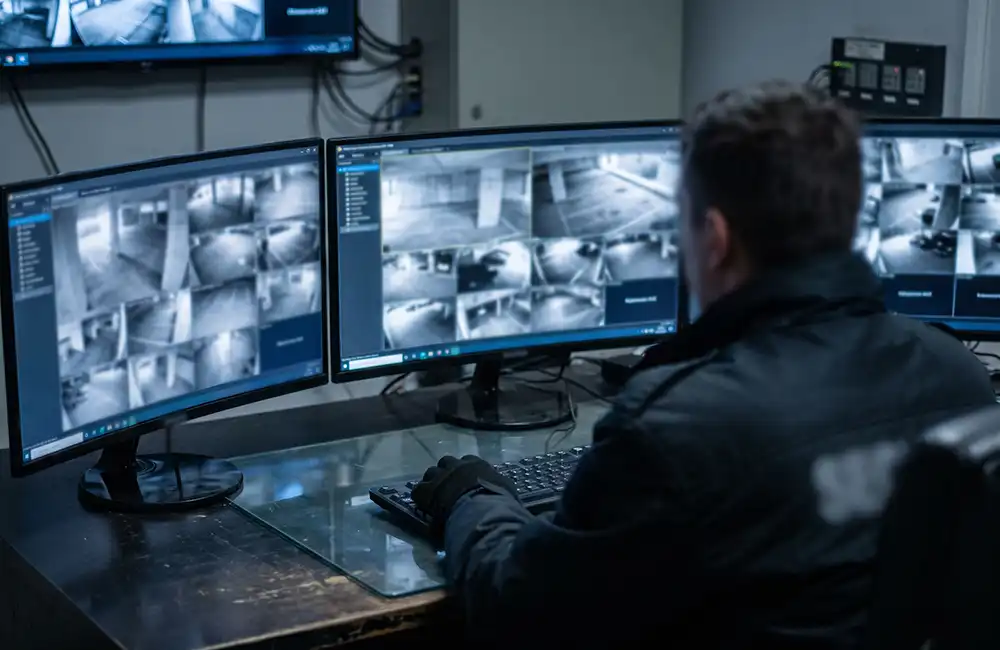
Modern IP CCTV is fundamentally different. It is a network-connected, software-driven platform — not a collection of isolated cameras and a recorder.
- High-definition imaging: 4K and 8MP IP cameras deliver images sharp enough to identify individuals, read vehicle number plates, and provide clear evidence in legal proceedings.
- AI-powered video analytics: This is the most significant change. Modern cameras and Video Management Software (VMS) can automatically detect: unauthorised entry or perimeter breaches, crowd density and unusual gathering behaviour, object left behind or removed alerts, Automatic Number Plate Recognition (ANPR), individual re-identification across multiple cameras, and fire and smoke detection.
- Cloud and hybrid storage: Footage can be stored locally on NVR, in the cloud, or in a hybrid combination — with automatic backup and retention policy management.
- Remote monitoring: IP CCTV systems can be monitored from anywhere in real time — by internal security teams or external monitoring centres.
- Integration with physical security platforms: Modern IP CCTV integrates with access control systems, alarm panels, and PSIM (Physical Security Information Management) platforms for unified monitoring.
Automatic Number Plate Recognition (ANPR) — A Game-Changer for Qatar
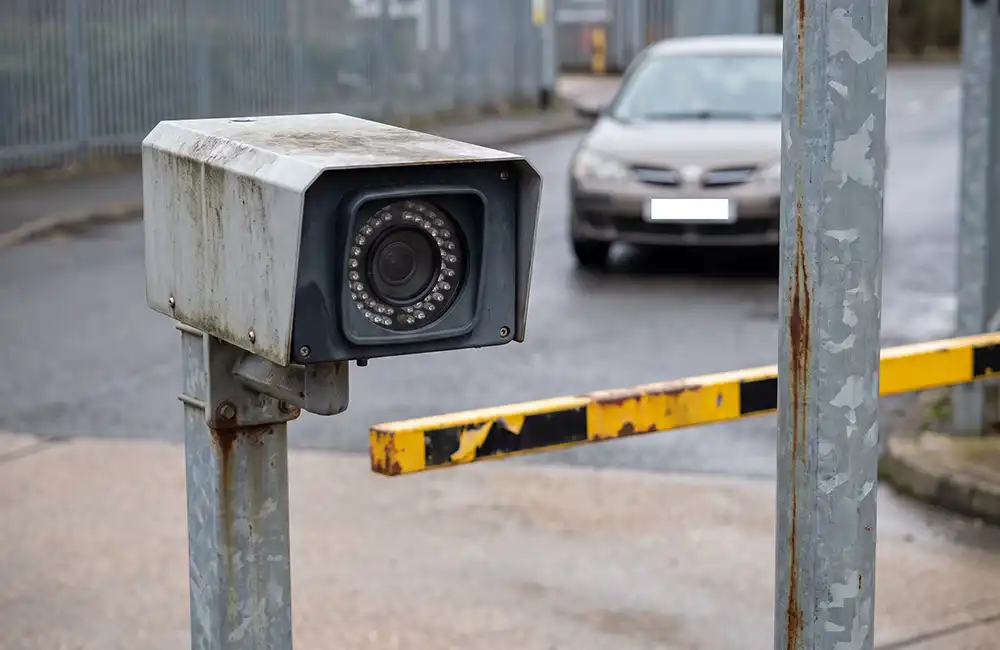
One of the most practically valuable capabilities of modern IP CCTV for Qatar environments is ANPR — Automatic Number Plate Recognition. ANPR cameras automatically read and log every vehicle entering and leaving a facility, comparing plates against watchlists and generating instant alerts for flagged vehicles.
For corporate headquarters, industrial facilities, residential compounds, and logistics operations across Qatar, ANPR provides a level of vehicle access control and audit capability that was previously only achievable with dedicated guard posts.
Thermal Cameras — Seeing What Standard Cameras Cannot
Thermal cameras detect heat signatures rather than visible light — making them effective in complete darkness, through smoke, and in environments where standard cameras struggle. For perimeter security around industrial facilities, data centres, and large compounds in Qatar, thermal cameras provide reliable detection that is not defeated by lighting conditions.
The Right Time to Upgrade — Signs Your System Needs Replacement
Consider upgrading your CCTV system if:
- Your cameras produce images that are unclear or unusable for identification purposes
- Your DVR or NVR is older than 5 years and experiencing reliability issues
- You are expanding your facility and your current system cannot scale
- You are planning an access control upgrade and want integrated physical security
- Your security team spends significant time manually reviewing footage
- You have experienced a security incident where footage quality was insufficient
Planning a CCTV Upgrade — What to Expect
A professional CCTV upgrade project typically involves: a site survey to map camera coverage requirements and identify blind spots; camera selection based on environment (indoor, outdoor, low light, high resolution, thermal); NVR and VMS platform selection based on storage requirements and analytics capability; structured cabling and power installation; commissioning and integration with existing access control or alarm systems; and staff training on the new platform.
For a typical commercial facility in Qatar — 1,000 to 3,000 square metres with 20 to 50 cameras — a professional upgrade can be completed within 2 to 4 weeks.
Conclusion
Modern IP CCTV is not just a better camera — it is an intelligent, integrated security platform. For organisations in Qatar looking to strengthen physical security, improve operational awareness, and meet the oversight expectations of enterprise and government clients, upgrading to IP-based surveillance with video analytics is one of the most visible and impactful technology investments available.
Frequently Asked Questions
Can existing analogue cameras be integrated with a new IP CCTV system?
In some cases, hybrid systems can bridge analogue cameras into an IP-based Video Management System during a phased upgrade, though image quality and analytics capability remain limited on the analogue cameras until they are replaced.
What is video analytics and do I need it?
Video analytics uses software to automatically detect events such as perimeter breaches, loitering, or unattended objects, reducing reliance on staff continuously watching live feeds. It significantly reduces manual monitoring workload for larger sites.
How many cameras does a typical commercial facility need?
This depends entirely on the size and layout of the facility, but coverage should be planned around entry points, common areas, car parks, and any area identified as a blind spot in a professional camera coverage assessment — not a fixed ratio.
Ready to take the next step?
Speak to our physical security team about a CCTV assessment for your facility in Qatar. We design and install IP surveillance systems for enterprises and SMEs across Doha.
→ Contact Noventrix Systems: info@noventrix.com.qa