














For many businesses in Qatar — particularly SMEs — an Annual Maintenance Contract (AMC) is the most practical way to manage IT costs, maintain system reliability, and access professional technical support without the overhead of a full in-house IT team.
But not all AMCs are equal. The quality of service, the scope of coverage, and the SLA terms can vary enormously between providers. Choosing the wrong AMC can leave you paying for coverage that does not include what you actually need — or worse, discovering the gaps only when something critical fails.
This guide will help you understand what a good AMC should cover, what questions to ask, and what to watch out for.
What Is an Annual Maintenance Contract (AMC)?
An AMC is a fixed-cost agreement between your organisation and an IT service provider, covering the maintenance, servicing, and support of your technology assets for a defined period — typically 12 months.
A well-structured AMC covers:
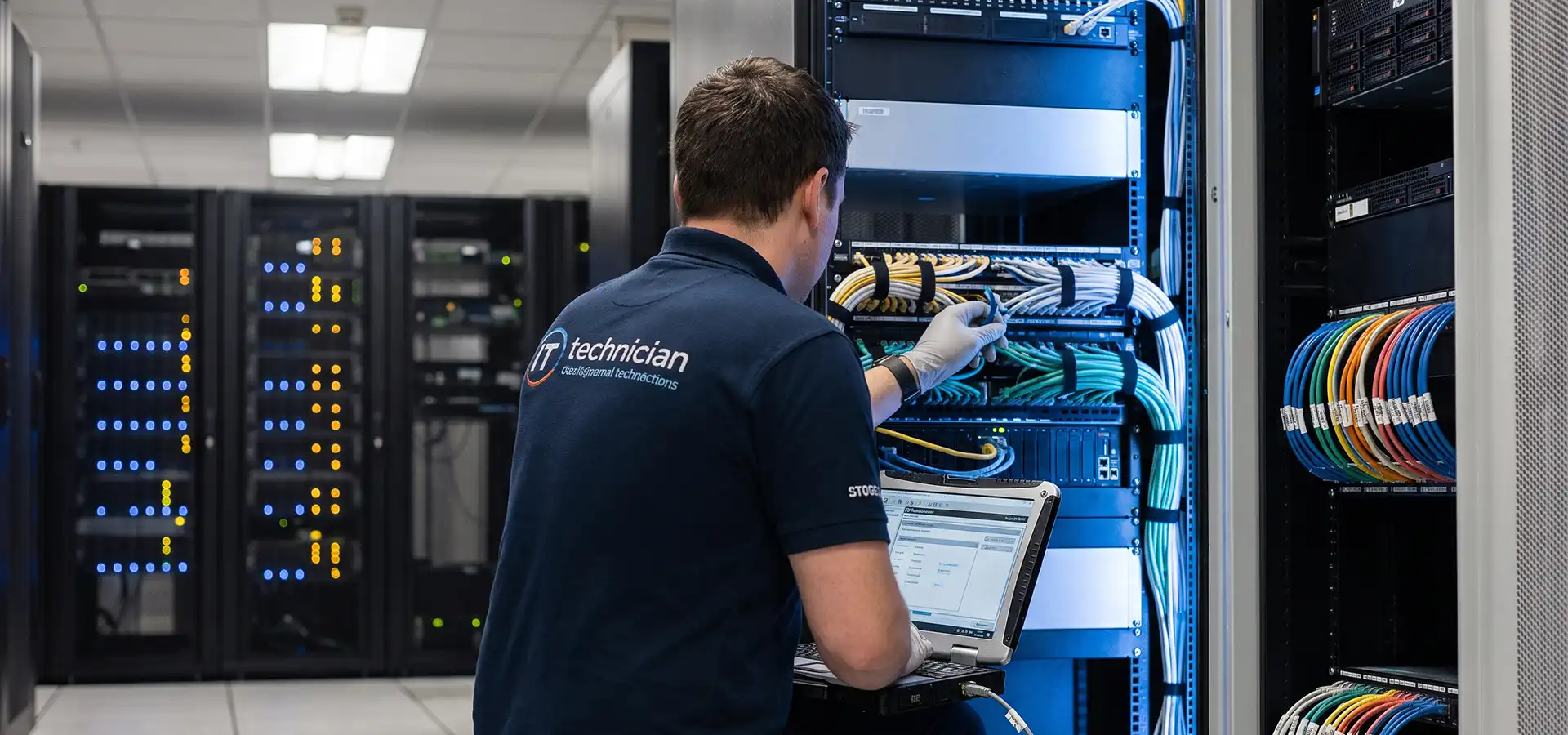
- Scheduled preventive maintenance visits — physical inspection and servicing of servers, network equipment, workstations, printers, and other hardware
- Remote monitoring — proactive health checks on servers, network devices, and critical systems
- Break-fix support — remote and on-site technical assistance when equipment fails or systems experience issues
- Software patch management — ensuring operating systems and applications remain updated and secure
- Response time guarantees — defined SLAs specifying how quickly the provider will respond to and resolve issues
AMC vs Managed IT Services — What Is the Difference?
An AMC is primarily focused on maintaining and repairing your existing hardware and systems. It is reactive and preventive — keeping what you have working.
Managed IT Services is a broader, more proactive model that also includes strategic oversight, helpdesk support, remote monitoring and management, asset lifecycle planning, and advisory services. Many organisations start with an AMC and expand to a full managed services model as their needs grow.
Both are available from Noventrix Systems, and many clients use a combination of both.

Key Questions to Ask Before Signing an AMC
Before committing to any AMC agreement, ask these questions:
- What equipment is covered? Ensure the contract specifies every category of equipment — servers, network switches, routers, wireless access points, workstations, laptops, printers, UPS systems, and CCTV. Vague scoping leads to disputes.
- How many preventive maintenance visits are included? A good AMC includes at least two scheduled PM visits per year — one mid-year and one at year-end. Some contracts offer quarterly visits for comprehensive coverage.
- What are the SLA response times? The contract should define response times for different severity levels. Critical issues (complete system outage) should have a response within 1–2 hours. Standard issues within 4–8 business hours. Ask specifically about weekend and public holiday coverage.
- Is remote monitoring included? Proactive monitoring — where the provider identifies and resolves issues before they cause outages — is a significant differentiator. Not all AMC providers offer this.
- What is excluded? Read the exclusions carefully. Many AMCs exclude damage from power surges, physical damage, or equipment older than a certain age. Understand exactly what is and is not covered.
- What is the escalation process? Ask what happens if an issue is not resolved within the SLA. A good provider has a documented escalation path, not just a helpdesk phone number.
What a Good SLA Looks Like
An SLA (Service Level Agreement) defines the minimum service standards your provider commits to. For IT maintenance in Qatar, reasonable benchmarks are:
- P1 — Critical (complete system outage): Response within 1 hour, on-site attendance within 4 hours
- P2 — High (major function unavailable): Response within 2 hours, resolution target within 8 hours
- P3 — Medium (reduced functionality): Response within 4 hours, resolution within 24 hours
- P4 — Low (minor issue): Response within 8 business hours, resolution within 48 hours
Ensure the SLA specifies response time (acknowledgement) separately from resolution time. Some providers only commit to response — not resolution.
Red Flags to Watch Out For
- Vague equipment lists — if the contract does not specify exactly what is covered, assume it is not.
- No defined SLAs — a verbal commitment to 'fast response' is not a contractual guarantee.
- Unlimited exclusions — watch for contracts that list so many exclusions that very little is actually covered.
- No preventive maintenance visits — a contract that only covers break-fix (repair when it breaks) is not a maintenance contract.
- No escalation process — if the provider cannot explain what happens when something goes wrong, that is a warning sign.
Why Many Qatar Businesses Prefer Fixed-Cost AMC Agreements
The primary benefit of an AMC is cost predictability. Without a maintenance contract, every hardware failure, support call, or emergency visit becomes an unplanned expense. For SMEs managing tight budgets, this unpredictability is particularly disruptive.
A good AMC converts variable IT support costs into a fixed, manageable annual fee — making IT budgeting straightforward and ensuring that maintenance does not get deferred because of unexpected costs.
Conclusion
Choosing the right AMC is not just about finding the lowest price — it is about finding a provider whose scope, SLAs, and commitment match the reliability requirements of your business. Take the time to evaluate the contract terms carefully, ask the right questions, and ensure the coverage matches your actual equipment and support needs.
Frequently Asked Questions
What is typically included in an AMC?
A good AMC covers scheduled maintenance, break-fix support, defined response and resolution times under an SLA, and remote or on-site technical support — the exact scope should be stated explicitly in the contract rather than left as a general assumption.
How is an AMC different from pay-as-you-go IT support?
An AMC is a fixed annual cost covering agreed services and response times, so maintenance is budgeted in advance. Pay-as-you-go support is billed per incident, which can make costs unpredictable and may delay maintenance decisions.
What SLA response time should an SME expect?
This depends on issue severity and the provider’s terms, but a well-structured AMC will define separate response times for critical, high, and low-priority issues rather than one blanket response time for all cases.
Ready to take the next step?
Speak to our team about an Annual Maintenance Contract tailored to your organisation in Qatar. We serve enterprises and SMEs across Doha with structured, SLA-backed IT maintenance.
→ Contact Noventrix Systems: info@noventrix.com.qa